Your are currently viewing
List of local attraction
HOT DEAL @Citrus Tre

HOT DEAL @Odah Ayu G

HOT DEAL @Citrus Tre

Hot Deal Ub Rafting

Hot Deal Tir- Har Sn

HOT DEAL @Ubud Heave

HOT DEAL @ Ubud Hea

HOT DEAL @ Mangoste

HOT DEAL @ Pandawas

Citrus Tree B&B

Watercress Ubud

Spirit of Gamelan (B

Kecak Ramayana And F

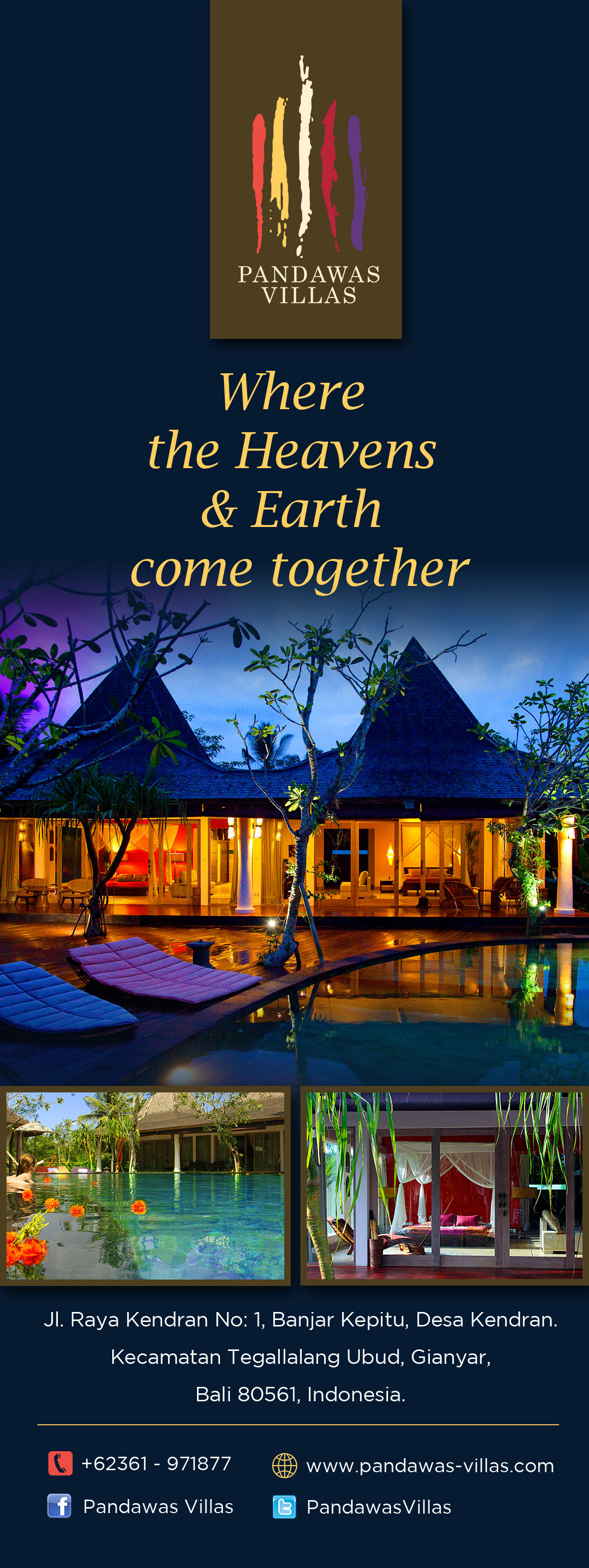
Pandawas Villas

Citrus Tree Rooms -

Citrus Tree Villas -

Citrus Tree Rooms -

Odah Ayu Guest House

Citrus Tree Rooms -

Fabulous Ubud - One just can't get enough of her
Ubud is the very heart of Bali - both geographically and metaphorically – Bali’s cultural capital where art and craft intermingle and all manner of eccentrics, autocrats, hippies, bohemians, altruists, gourmets, Bali royalty, and of course, artists form an intriguing amalgamation that feels so much more connected to the local culture than in resort enclaves elsewhere in Bali.
Fabulous Ubud replete with her heritage & history,
An amazing mosaic of natural splendor,
She is a fascinating mix of the old and the new,
Of tradition and modernity.
Winding biking paths,
Walk tours in scenic rice plantations
The historic Batuan, Mas, Celuk and Batubulan art,
Kecak and Legong dances by the sunset,
The Langse, the Kamasan, Wayang paintings - all jostling side by side
Promise to entice you away from other pulsating destinations and keep you mesmerized in Ubud forever.
A cultural heritage that dates back several centuries, shaped over years, by political powers, religion and cultures, Bali's paradisiacal charm and spirit has since long attracted a steady stream of artists, mystics and celebrities from across the world, while new residents have woven Balinese old world charm with chic elegance, eclectic modernity and more. Elizabeth Gilbert's best selling novel, " Eat, Love, Pray " or Julia Roberts in the eponymous film more than anything else, has opened up the eyes of millions of people in the West to look beyond the obvious - ribbons of unending beach, pulse pounding surf, clubbing by day and night ... at the rich cultural tapestry of Bali i.e. Ubud - where heavenly and earthly energies most perfectly synergize.
The once small village of Ubud now spreads itself across an undulating landscape of verdant valleys, ridges, rice paddies and rolling hills, all interspersed by countless peaceful and picturesque neighborhood streets and hamlets where one can still feel the essence of village life from days of yore.
Ubud’s main thoroughfare is the junction of Monkey Forest Road and Jl. Raya Ubud. It is where foot easily accesses distinctive boutiques and restaurants, markets stalls, ornate temples and palaces where accomplished dancers and gamelan orchestras perform each evening.
With all its vitality of the past and present day Hinduism, the volcanic mountains, flowers on the frangipani tree, the numinous power of a sacred spring, the courtyard shrines, the impossibly green paddy fields, skin crisping sunshine, cascading rain, art is in everything around you in Ubud. Even the simplest activity is carried out with artistic flair... beginning with the little prayer offerings every morning. Ubud has this energizing ability to regenerate, refresh and renew your body and soul, however not everyone is guaranteed mid-life love... a Javier Bardem, though.
Bali’s spiritual - cultural capital, Ubud ... one does fall in love with the gentle rhythm of the city, its mesmerizing art, its people, the pondok pavilion dwellings in the rice fields, the food, and the overall sense of serenity that exudes from just about everywhere. So simply sit back, ponder, take stock and seek fulfillment!
Most travelers arrive in Ubud intending to see art, craft and dance; but find themselves doing much more, exploring the scenic rice terraces on bicycles, taking misty treks amid dormant volcanoes and lush forested hills, while some unsurprisingly even wish they had gotten out of the pulsating party scene sooner.
It is useful for visitors to know that what is generally called Ubud is actually a collection of 13 villages (Desa Adat): Ubud Kelod, Ubud Tengah, Ubud Kaja, Sambahan, Bentuyung, Junjungan, Tegalantang, Taman Kaja, Taman Kelod, Padang Tegal Kaja, Padang Tegal Tengah, Padangtegal Kelod, Padangtegal Mekar Sari. Each of which have three major temples.
Despite the obvious hike in tourism, Ubud still has most of its old world spirit intact. One can hardly communicate the intangible nature of what makes Ubud so magical, but the following highlights should give traveler good ideas of reasons to just go!
Head west in the direction of Campuhan and you approach one of Ubud's prettiest parts and also its place of its origin. According to ancient Lontar manuscripts, when the mighty Hindu Empire of Majapahit succumbed to Islam at the turn of the 16thcentury, 2000 members of its cultural elite – artisans, scholars, priests, and royalty – fled eastward to Bali.
A fertile valley at the confluence of two rivers, campuhan in Balinese, was deemed the perfect spot for a settlement and Ubud’s course was set. Centuries later there was another influx, this time of European bohemians - artists like Rudolf Bonnet and Walter Spies - who proved instrumental in effecting a shift away from art anchored to ritual and religion, towards more secular expressions. You don't have to dig deep to uncover Ubud's artistic legacy - there seem to be as many galleries as there are homes – from tiny hole-in-the-walls, to stately museums.
South of central Ubud lies the enchanting villages of Nyuhkuning and Pengosekan, where Bali’s first village –level artistic cooperative was established in 1969 and where some of Ubuds’ best restaurants are located.
To the west of central Ubud are the Sayan and Ayung River valleys where one can marvel at the majestic lush jungle views that seem to stretch on forever. To the East are the charming villages of Peliatan, with it’s long performing arts tradition, and Petulu, where every afternoon droves of white herons and egrets come to nest in the trees.
Head due northeast through the town of Andong via the “handicrafts highway,” where innumerable artisan shops line the streets, and you will reach the famous emerald green Ceking rice terraces that date back 2000 years. A mere ten-minute drive from this spectacular site is the mountain village of Tegallalang with its spectacular rice paddy fields.


